
Cardiac Mass
Written by: Dr. June Chu
Edited by: Dr. Joann Hsu
Case:
68-year-old male with history of metastatic hepatocellular carcinoma presents with hypotension and chest pain.
Bedside echo shows:
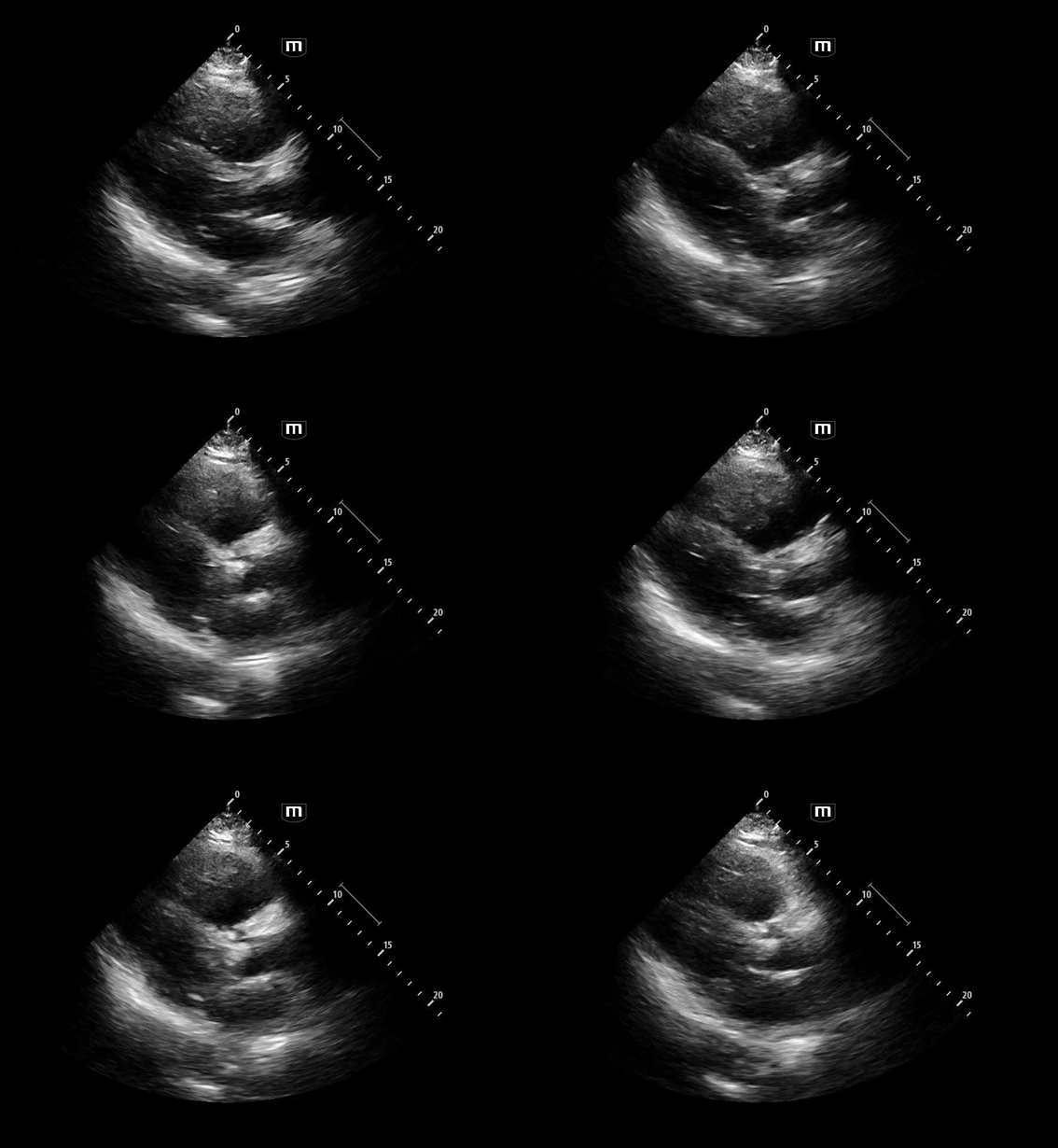
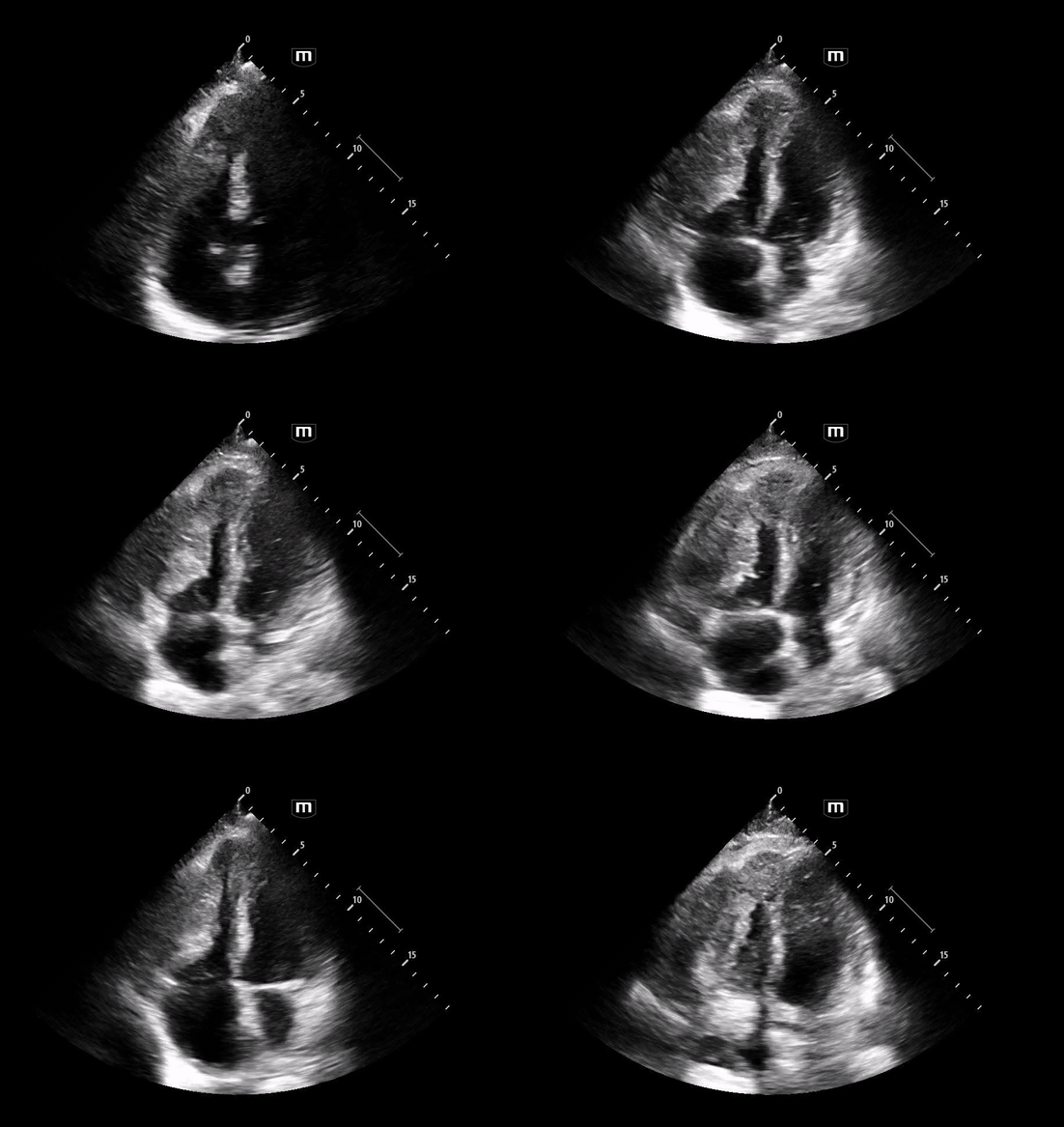
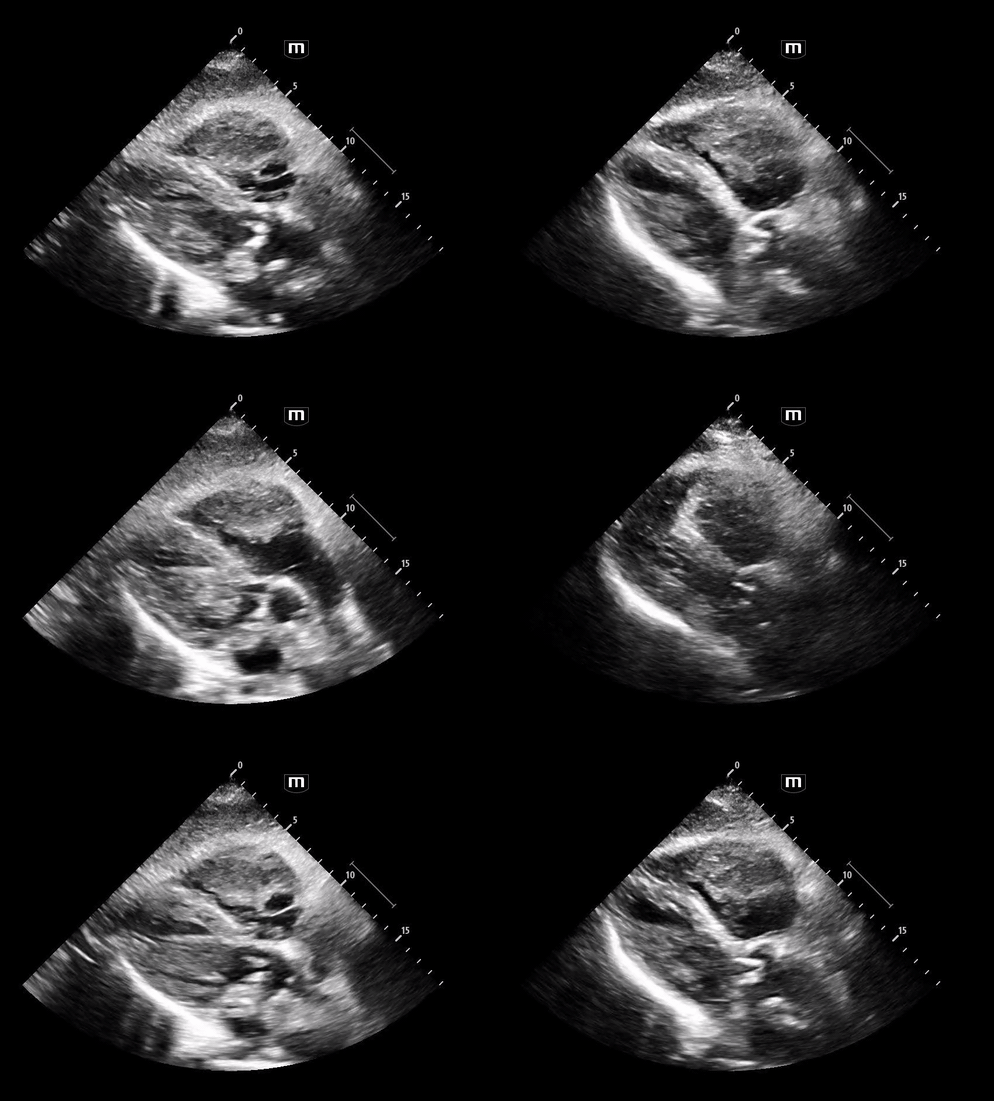
Notice there is a mass in the right ventricle visible in all three of the above views. This mass appears to be the same echotexture as the adjacent ventricle muscles, but it does not contract like muscle. It appears adhered to the lateral wall of the RV and occludes a lot of the RV lumen.
Formal echo showed:
“There is a large echogenic structure seen in the right ventricle which appears attached to the right ventricular free wall. This structure measures at least 9.5 cm x 4.2 cm. “
“There is obliteration of the RV cavity by this structure.”
“There is an intracavitary gradient within the right ventricle, measuring up to 16 mm Hg. “
The right ventricle is severely dilated.”
Diagnosis: Hepatocellular carcinoma with metastases to the right ventricle!
Let’s discuss cardiac masses.
Cardiac masses can be classified into primary and secondary cardiac masses.
Primary cardiac masses are much less common than secondary cardiac masses.
75% of primary cardiac tumors are benign.
Of the benign masses, myxomas are the most common, representing 25% of all cardiac masses, and over 50% of benign cardiac masses.
Other kinds of benign cardiac tumors include lipomas, papillary fibroelastomas, and rhabdomyomas (which are the most common in the pediatric population.)
Malignant tumors represent 25% of primary cardiac masses, with sarcomas (particularly angiosarcomas) being the most common.
They most commonly affect people aged 30-50 and can infiltrate the myocardium and cause obstruction of blood flow.
Secondary cardiac masses are metastases from other primary cancer sites.
They are 30 to 40 times more common than primary cardiac tumors, and may metastasize from melanoma, lung cancer, breast cancer, renal cancer, and lymphomas most commonly.
It is rare to see cardiac metastases originating from the liver as seen in this patient.
Most commonly, the metastases affect the pericardium and result in pericardial effusion.
Cardiac masses are usually diagnosed by transthoracic echo (TTE).
If a cardiac mass is suspected but not seen on TTE, other imaging modalities to evaluate for it might include contrast echo, 3D echo, TTE, cardiac MRI, or cardiac CT.
Treatment
Treatment of primary cardiac masses is generally surgical resection.
The urgency of the surgical intervention depends on the type of tumor, with myxomas requiring immediate surgical resection due to high rates of embolic and cardiac complications.
Malignant/primary cardiac tumors tend to infiltrate the myocardium and have a very poor prognosis.
Sarcomas should be surgically resected, and chemotherapy may be considered as an adjuvant to surgery.
Secondary cardiac tumors (metastases) are managed by treating the primary cancer.
Returning to the original case…
Admitted to GMF for unstable Vtach, deemed likely due to metastases to heart.
Was discharged home 6/11, although with a poor prognosis.
Learning points:
Secondary (metastatic) cardiac masses are 30-40x more common than primary cardiac masses
Myxomas are the most common cardiac tumor, but require immediate resection due to high rates of embolic/cardiac complications
Bedside ultrasound can be used to visualize cardiac masses
Primary cardiac tumors generally are managed surgically, but metastases should be treated by treating the primary cancer.
Happy scanning!