
A Bump in the Womb
Written by: Dr. Michael Lin
Edited by: Dr. Joann Hsu
39yoF presents for vaginal bleeding. She had 3 days of increased lower abdominal cramping and new onset of vaginal bleeding which prompted her ED visit. Ultrasound performed last week with no cardiac activity. LMP was 3months ago. The patient has had four failed pregnancies in the past.
Bedside POCUS shows:
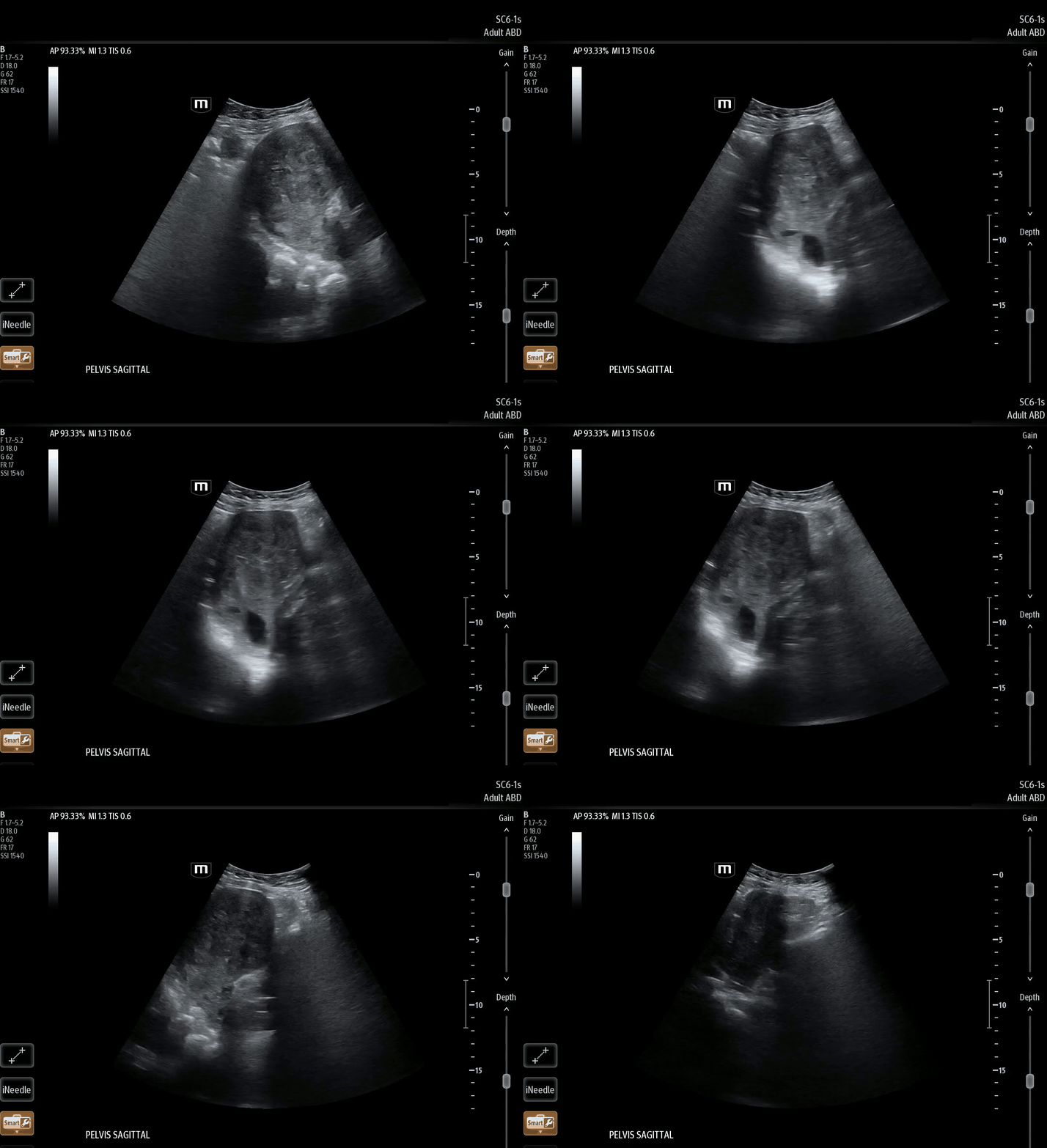
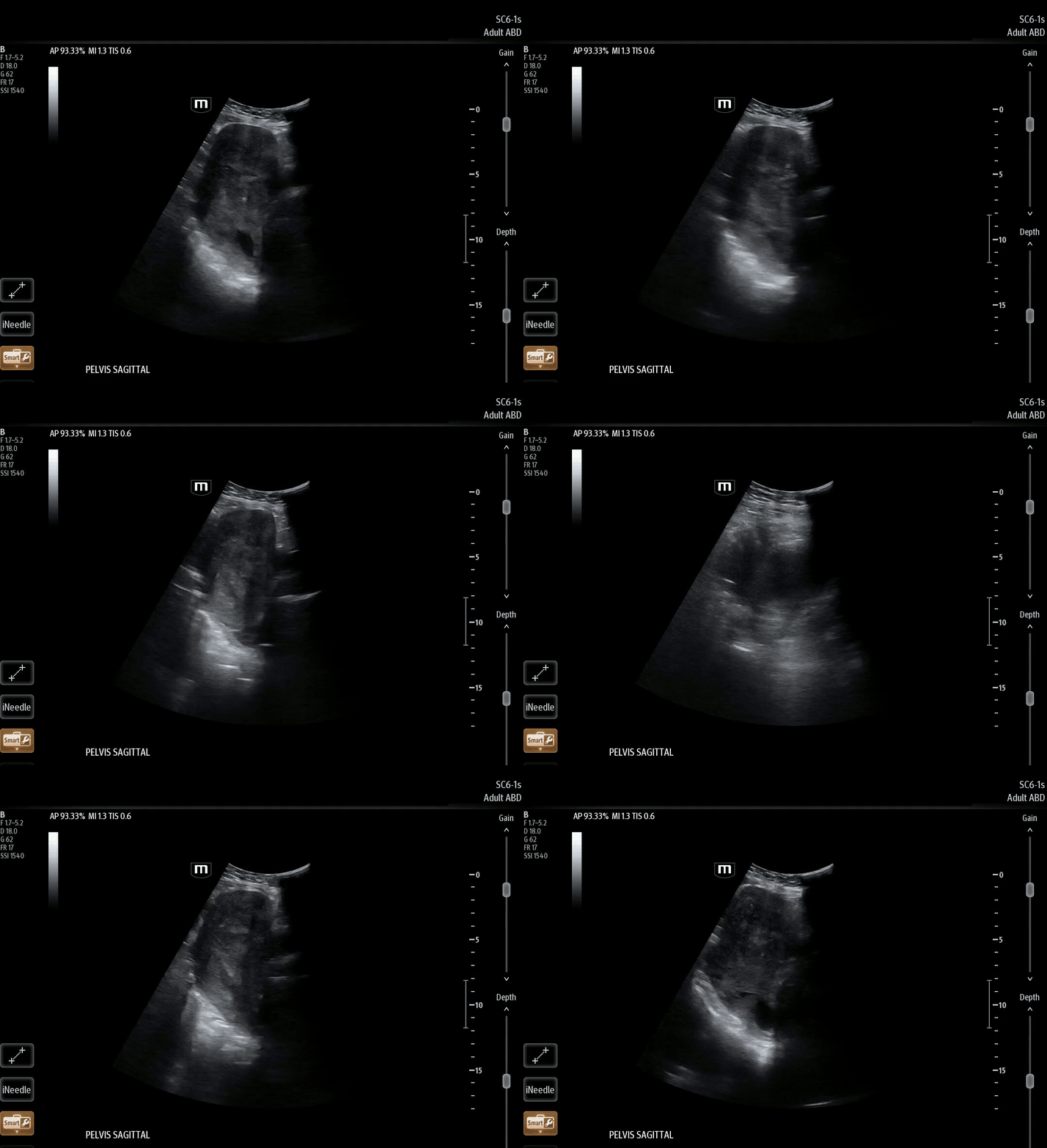
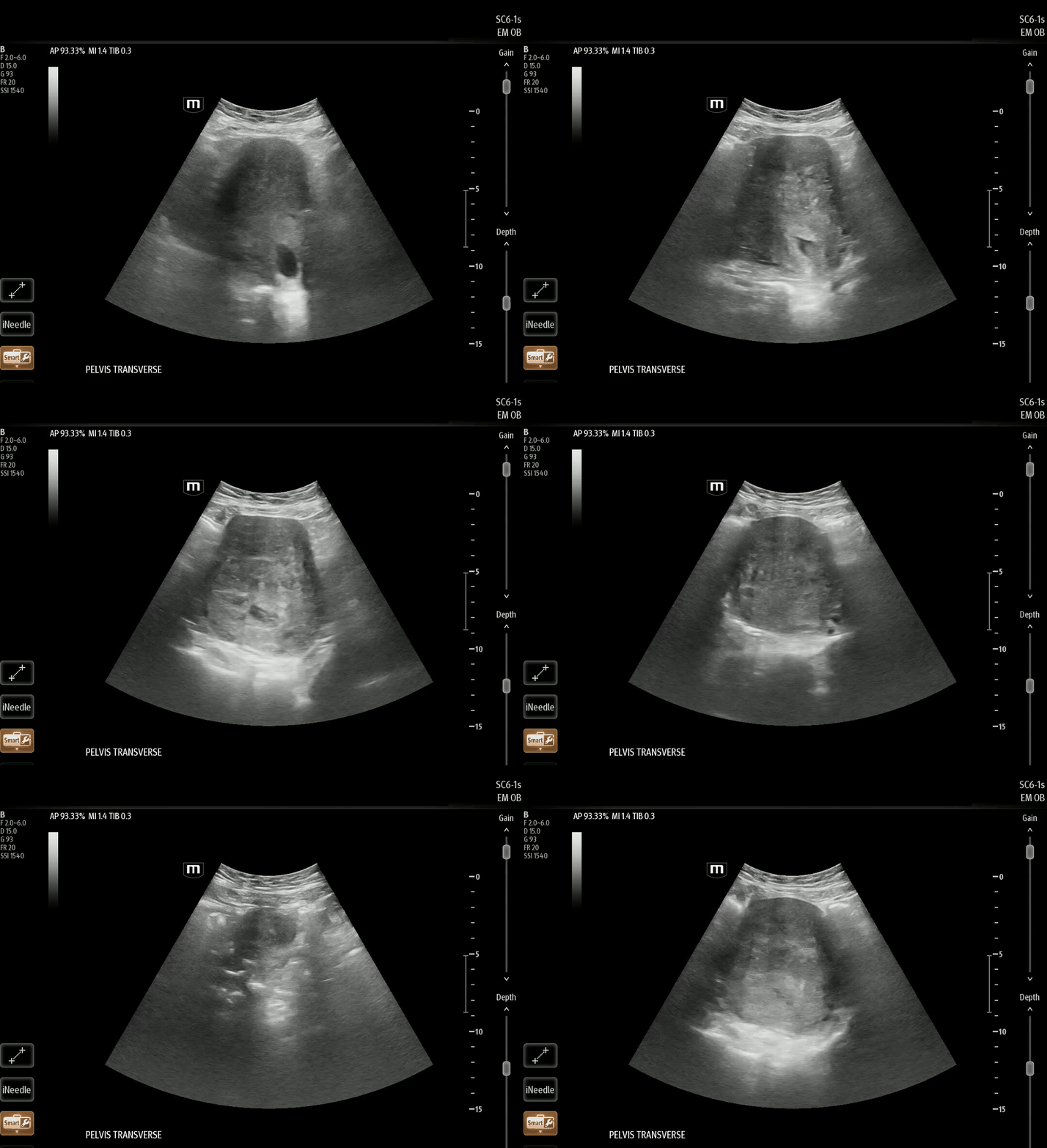
Adenomyosis
What is adenomyosis?
Usually benign condition where endometrial glands grow into the myometrial lining
More diffuse and not well encapsulated, often causing global uterus enlargement
Associated with vaginal bleeding, cramping, chronic pain, and infertility
Imaging modality for diagnosis: ultrasound and MRI
Venetian Blind Sign
What do you see?
Shadowing caused by alternating hypo and hyperechoic bands (see below)
Often called “fan-shaped” shadowing or “rain shower” appearance
Usually indicative of adenomyosis or fibroids
Differentiated by calcifications seen in fibroids with edge/posterior shadowing

FYI this is what a venetian blind is.
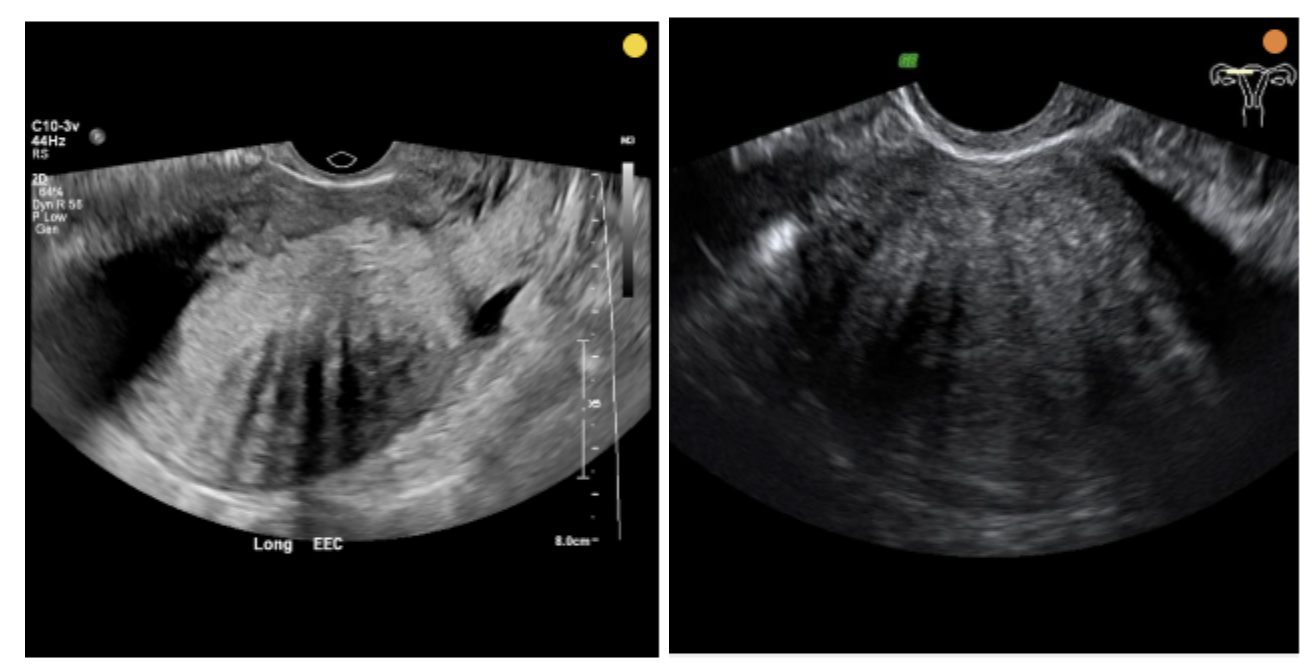
Figures show alternating hyperechoic and hypoechoic banding caused by varying attenuation starting at endometrium to myometrium aka venetian blind sign.
Leiomyoma
What are leiomyomas?
Also known as uterine fibroids or tumors of the myometrium
In contrast to adenomyosis, leiomyomas are discrete masses/nodules.
Seen in 25% women of reproductive age and 70% in menopausal
Stimulated by hormones such as estrogen
Causes vaginal bleeding, pain and infertility
Imaging modality of diagnosis: Ultrasound, CT and MRI
Classifications
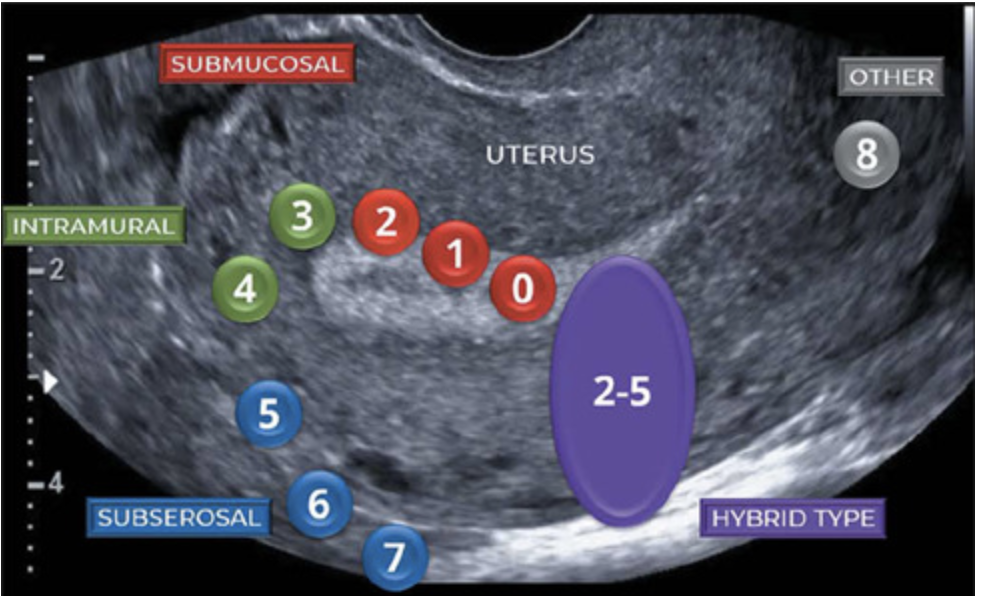
Figure shows FIGO classification of fibroids

Ultrasound Findings
Solid mass with heterogeneous texture
Usually round with defined edges along with acoustic shadowing
“Popcorn calcifications” with shadowing
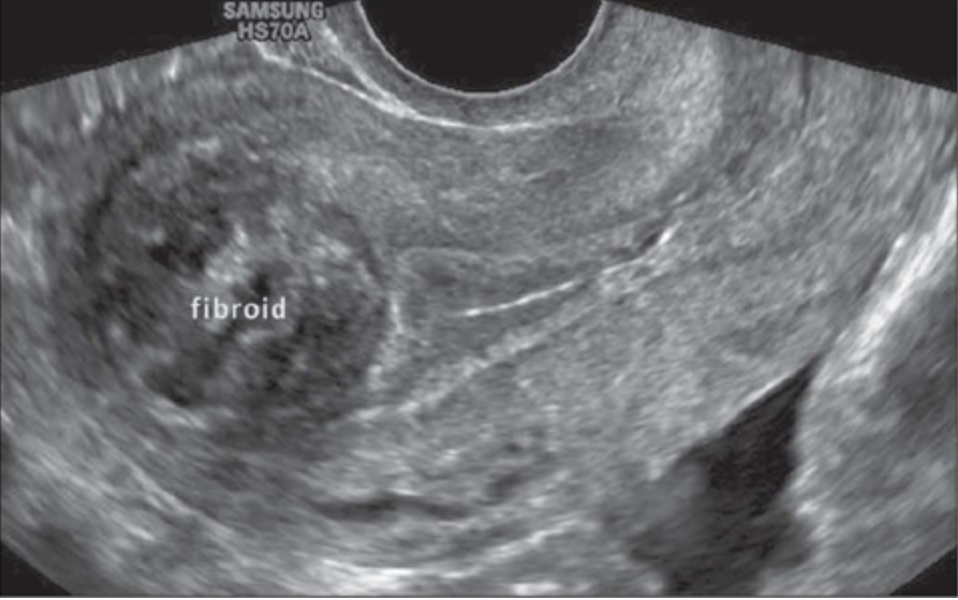
Figure above shows fibroid with edge shadowing
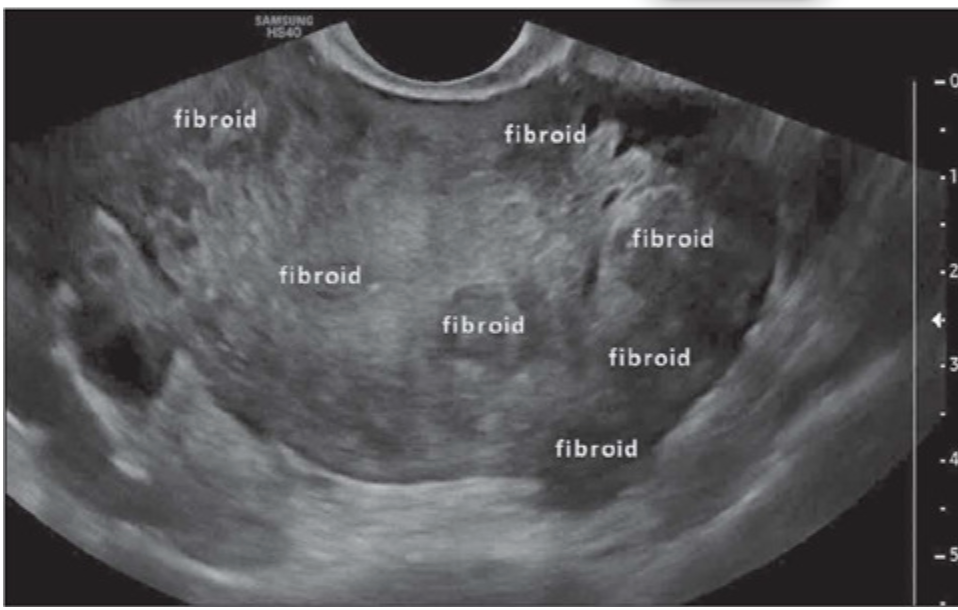
Figure above shows enlarged uterus with multiple fibroids
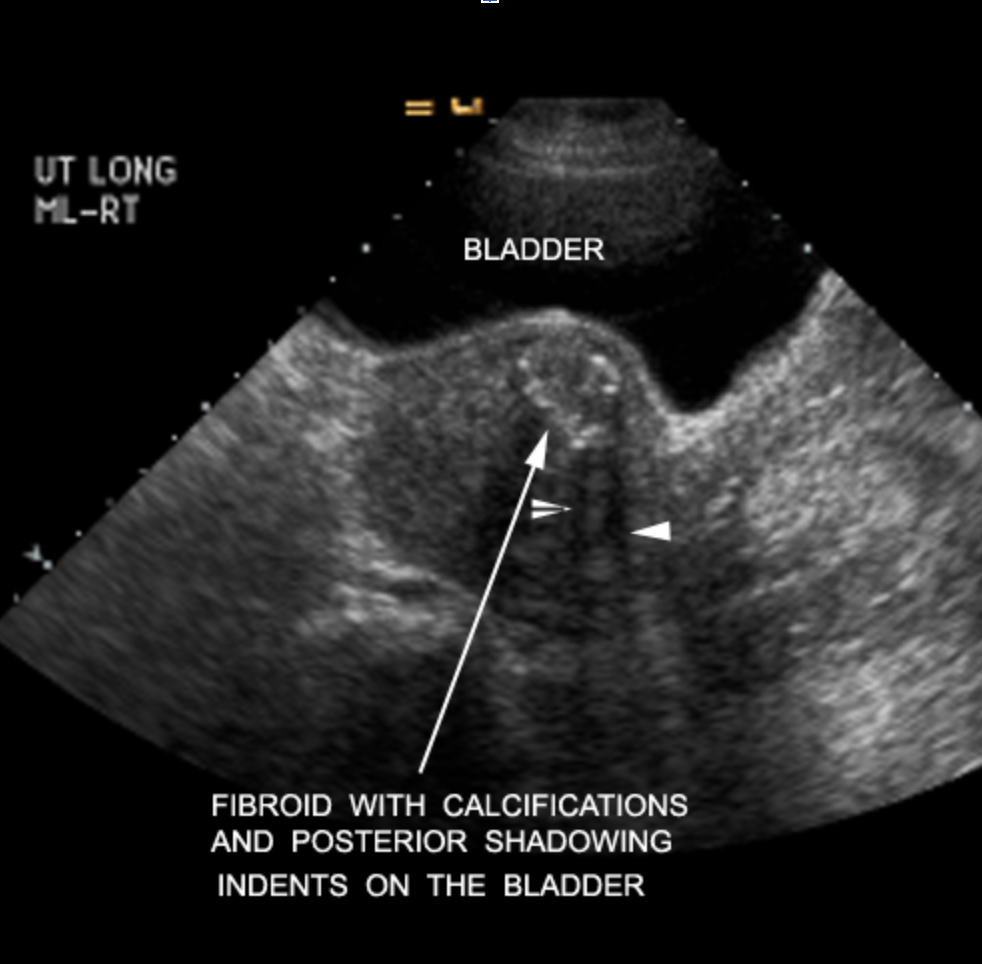
Figure shows “popcorn calcifications” or hyperechoic structures with posterior enhancements
Risks of both
Both adenomyoma and especially leiomyomas contribute to symptoms such as abdominal pain and vaginal bleeding.
Disruptions of endometrial lining, changes in vascularity, difficulty implantation, placental disruption are all obstacles these pathologies cause that increase risk of pregnancy loss
Back to Patient Case
Official transvaginal ultrasounds shows
Findings show uterine fibroids as well findings suspicious for inevitable miscarriage.
OBGYN was consulted and on pelvic exam was able to visualize a “sac-like structure" at the os
Patient was prescribed cytotec and discharged with OBGYN followup
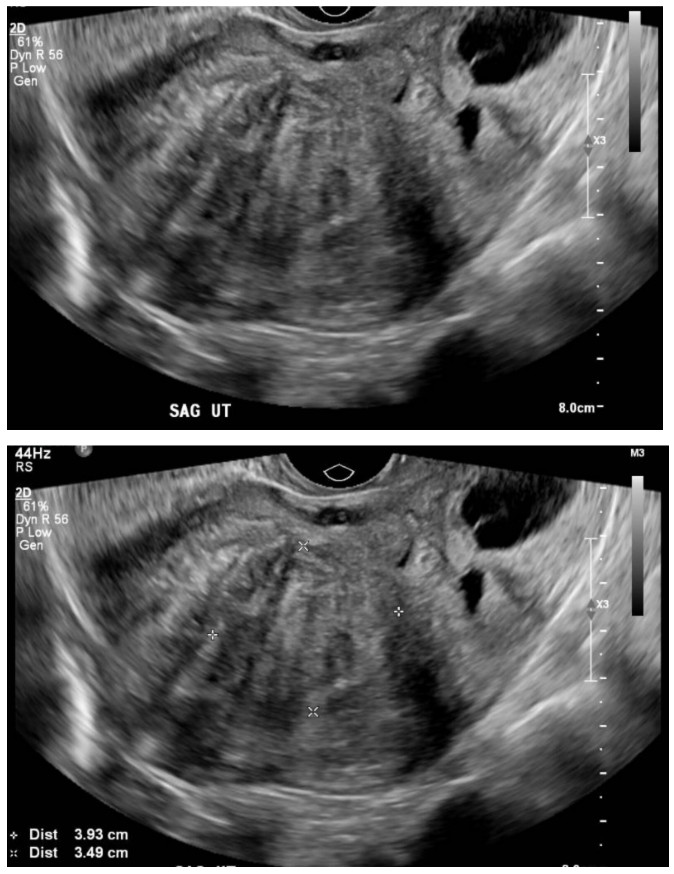
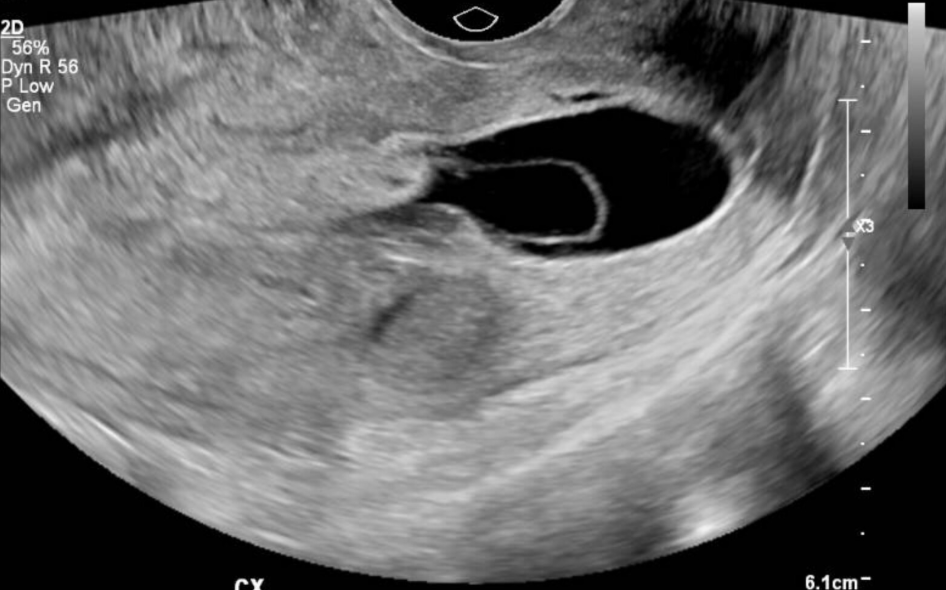
Figure shows empty gestation sac
Happy scanning!
References:
https://radiopaedia.org/articles/venetian-blind-appearance-uterus?lang=us
https://pmc.ncbi.nlm.nih.gov/articles/PMC10381628/
https://radiopaedia.org/articles/uterine-leiomyoma?lang=us
https://radiopaedia.org/cases/uterine-leiomyoma-fibroid-classification-system-illustration?lang=us
https://pmc.ncbi.nlm.nih.gov/articles/PMC10165971/
https://pubmed.ncbi.nlm.nih.gov/40299726/